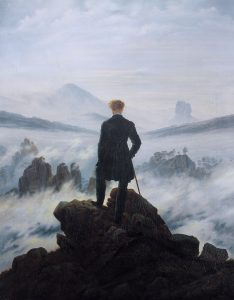

“In the generations since his death many have wondered what Keats would have accomplished had he lived. Such thoughts, however, focus on the tragedy of the poet’s death, rather than on the sustained richness of his achievements” (Broadview 1083).
I really found these sentences in the opening biography of Keats impactful and telling about the life that Keats lived. I believe that we do overly imagine the greatness that would have come from Keats, instead of valuing what he was able to accomplish. The effect of this is that we can end up undervaluing the poetry he created during his short life. Secondly, I would argue that we boil the figure of Keats down into his death. He could be seen solely in the image of his grave, not the prolific writings he developed. Is his death tragic? Yes, of course. But I think that to ignore all other aspects of him is to do him a disservice.
Throughout the poems we read for today’s class, I was able to recognize the thematic elements of fancy and imagination. In particular, this can be seen in Sleep and Poetry, which was my favorite of his poems that we read. The way the dreamer moves in and out of sleep is seamless, yet painful to watch. You can see him want to remain in that dreamscape but the imminent morning (waking up) is always near by. I love how the poem depicts life’s constant sense of fleeting and mystery.
“Stop and consider! Life is but a day;
A fragile dew-drop on its perilous way…” (Lines 85-6).
Life in this form is made precious, while still showing its ability to cause one intense pain and grief. Life to Keats marked moments of flashing danger, coupled with the beauty found in his imagination and dreams.
 Romanticism Blog