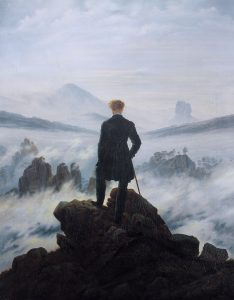

In introduction to Romantic Poetry, we read certain essays from critics like Arthur O. Lovejoy, W.L. Wimsatt, and M. H. Abrams. Each author presented a clear, while also varied, account of what Romanticism is and how it has been developed over decades. The most interesting idea that I found within these texts came from Lovejoy. He described how the arts had been in the course of evolving toward Romanticism in the late 1700s, early 1800s, since the Renaissance. I thought it was fascinating that so much of the details of what Romanticism would come to be were in place so early on, it was only a matter of society and culture at that time that prevented the full expression of Romanticism.
From each essay, I was wholly interested in the unifying aspects of Romanticism and its cyclical tendencies. Romanticism brought forth a joining of the outward with the internal in both the individual and the individual’s relationship with their surroundings. I feel that even today, we attempt to categorize our lives into separate boxes. Romanticism transcends past this idea that our lives should have separate voices to distinguish separate experiences. Romanticism as a literary movement wants the reader to see that every single experience within their life is connected in some way and that these events can be timeless. Our experiences with nature may grow to repeat themselves from one day to the next, making them an intense experience worth cataloging. This idea was really impactful in my understanding of Romanticism because it draws me, as the reader, more into learning about the psyche of the authors and artists we will be studying.
 Romanticism Blog